

 If you’re managing a commercial property or business in Pittsburgh, you already know how much the weather and traffic can wear down your asphalt. But what many business owners overlook is how those same issues can quietly push you out of ADA compliance—and right into costly fines.
At Brant’s Asphalt, we’ve seen firsthand how proactive maintenance doesn’t just extend the life of your lot—it protects your business from penalties, legal issues, and lost customer trust.
Here’s how keeping up with your parking lot maintenance helps you stay ADA compliant in Pittsburgh.
Key Takeaways
- Parking lot neglect in Pittsburgh can quietly lead to ADA violations and expensive fines for local businesses.
- Faded striping, steep slopes, and broken ramps are common ADA issues caused by weather and wear.
- Poor drainage and damaged signs often go unnoticed but can make lots noncompliant under ADA rules.
- Brant’s Asphalt helps Pittsburgh properties stay ADA compliant with routine striping, repairs, and lot maintenance services.
Prevents Faded or Incorrect ADA Striping
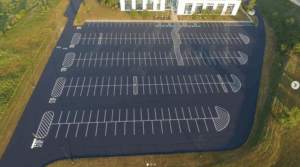
Line striping is one of the most visible ADA compliance factors—and one of the easiest to get wrong without regular maintenance. In areas like East Liberty, where high foot and vehicle traffic wear down paint faster, we often see accessible parking spots with faded markings or missing wheelchair symbols.
Without clear, properly-sized striping and signage, your lot could be flagged during an inspection by the Pennsylvania Human Relations Commission or cited under Title III of the ADA.
Regular repainting using the correct dimensions and layouts ensures you meet the federal requirements and avoid complaints from customers or passersby.
Maintains Correct Slope and Surface for Accessible Routes
Pittsburgh’s freeze-thaw cycles and older infrastructure mean that asphalt surfaces can shift or crack over time. In neighborhoods like Squirrel Hill or near the universities in Oakland, where terrain slopes are common, even small surface changes can cause ramps or paths to exceed the 1:12 maximum slope allowed by ADA guidelines.
If your designated accessible route becomes uneven, cracked, or too steep, it may no longer be compliant, putting your business at risk for violations.
Regular inspections and maintenance allow us to catch and correct these issues before they become liabilities.
Ensures Proper Curb Ramp Functionality and Placement
Curb ramps are a key part of ADA compliance, especially at the intersections and lot entrances near downtown Pittsburgh or in business corridors like Carson Street in the South Side.
When we inspect lots, we often find curb ramps that were compliant when installed, but now have crumbled edges, ponding water, or incorrect alignment with accessible paths. These can all result in violations.
Maintaining your lot gives us a chance to make sure all ramps meet ADA standards and still provide a safe, usable transition from the parking space to the building entrance.
Prevents Drainage Issues That Create Slip Hazards
The city’s unpredictable rain patterns and sloped landscapes—especially near Mount Washington or Polish Hill—can turn poorly maintained parking lots into pools of standing water.
Not only does this lead to faster deterioration, but it creates hazards for people with mobility issues, who may be using wheelchairs, walkers, or canes. If your lot allows water to collect near accessible spaces or routes, that alone can violate ADA regulations.
Routine sealcoating, grading, and drainage checks help prevent these problems and protect you from liability.
Keeps Signage Up to Date and Visible Year-Round
In Pittsburgh, winter road salt, snowplows, and fluctuating temperatures can do a number on parking lot signage. We see signs in places like Highland Park or the Strip District that are tilted, rusted, or obscured by vegetation. If your accessible parking signage is damaged or missing altogether, it’s an immediate red flag for ADA compliance.
Part of our maintenance process includes inspecting signs for visibility, height requirements (typically 60 inches to the bottom of the sign), and proper placement so your lot stays compliant through every season.
Stay Ahead of ADA Compliance Fines with Expert Parking Lot Maintenance
At Brant’s Asphalt, we specialize in helping local businesses—from Shadyside boutiques to North Hills office parks—keep their parking lots clean, compliant, and ready for daily use. We handle everything from restriping and resurfacing to repair and drainage solutions. Let us help you avoid surprises during your next inspection.
Call us today to schedule a free compliance check or maintenance estimate.
Frequently Asked Questions
How often should a Pittsburgh business schedule a full ADA compliance inspection for its parking lot?
A full ADA compliance inspection should be done every one to two years, especially after major resurfacing, sealcoating, or winter damage, to catch changes that may affect slope, access, or layout.
Do ADA requirements apply to small lots with only a few parking spaces?
Yes, even a parking lot with just one or two spaces must meet ADA rules, which include proper access, signage, and space width, regardless of business size or parking volume.
What happens if someone files an ADA complaint against my property in Pittsburgh?
If a complaint is filed, you may be investigated by the Department of Justice or a civil court, potentially facing fines, legal costs, and mandatory upgrades depending on the violation’s severity.
Can ADA upgrades be phased in over time, or must everything be fixed at once?
ADA compliance can be phased in with a clear plan, starting with the most serious barriers, but ignoring known issues may still lead to citations or lawsuits under current federal enforcement standards.


