

 If you manage a commercial property in Pittsburgh, asphalt is not just a surface. It affects safety, inspections, tenant access, and long-term operating costs. From freeze-thaw cycles off the Monongahela to heavy delivery traffic near I-376 and Route 28, local conditions punish pavement fast.
Knowing what an asphalt company actually does, and when each service makes sense, helps you plan work before small failures turn into budget problems.
Below, we break down how we approach commercial asphalt work across the Pittsburgh area and how to evaluate your options with confidence.
Key Takeaways
- Commercial asphalt services range from protective maintenance to full reconstruction, each with a specific purpose.
- Pittsburgh’s climate and soil conditions make proper base evaluation especially important.
- Traffic load and property use should drive every asphalt decision.
- Evaluating lifecycle cost helps avoid repeat repairs and unplanned downtime.
Core Asphalt Services and When Property Owners Need Them
Commercial asphalt work is not one-size-fits-all. Each service solves a different problem, and timing matters more than most owners realize.
New Asphalt Installation
New installation is required for ground-up construction, major redevelopments, or sites where the existing pavement base has failed.
This is common in older industrial corridors like the Strip District or along Route 51, where truck traffic has stressed the subgrade for decades.
The process includes excavation, stone base installation, grading for drainage, and asphalt paving to meet load requirements.
In Pittsburgh, proper base depth is critical due to clay soils and winter freeze cycles. For commercial properties, new installation is often coordinated with zoning reviews, ADA access planning, and utility tie-ins before final paving.
Milling and Overlay
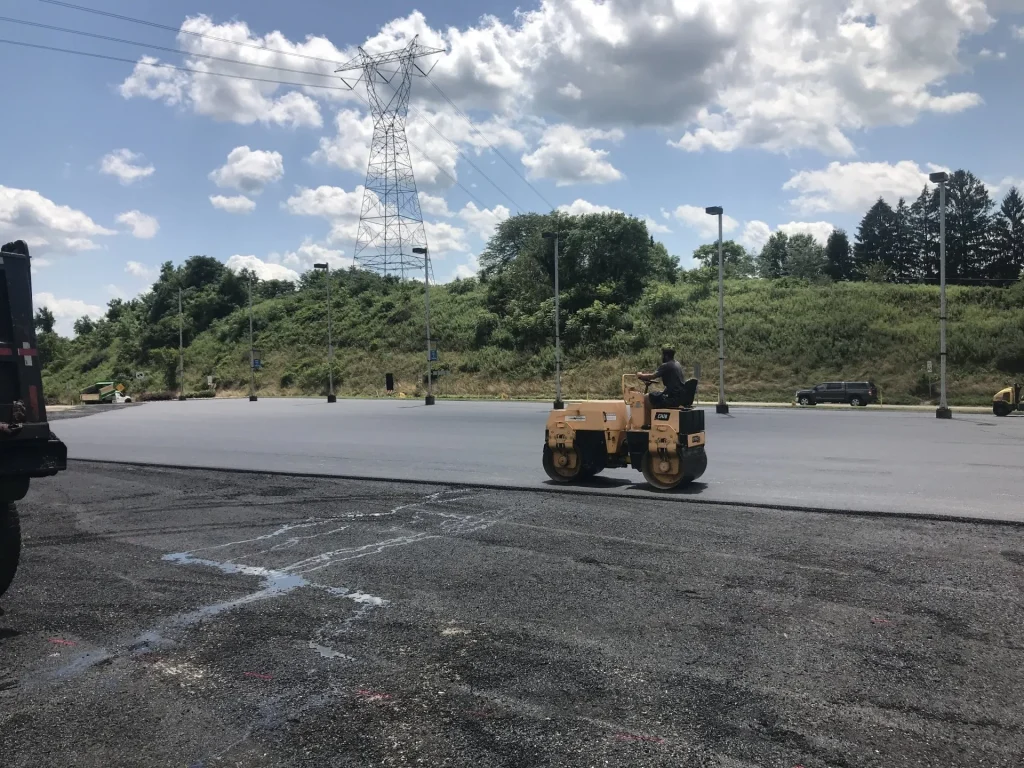
Milling and overlay are used when pavement is structurally sound, but the surface is worn, cracked, or uneven.
We remove the top layer of asphalt and replace it with a new surface, restoring ride quality and slope.
This is common in office parks around Robinson Township and Monroeville, where parking lots see steady but predictable traffic.
Milling avoids full reconstruction costs and helps maintain existing elevations near loading docks, curbs, and storm drains.
For many commercial owners, this is the best balance between performance and budget.
Asphalt Patching and Repairs
Patching addresses localized failures like potholes, alligator cracking, or utility cuts.
These issues show up fast after Pittsburgh winters, especially on properties near rivers where moisture intrusion is common.
Proper commercial patching involves saw-cutting, base repair, and full-depth asphalt replacement, not just surface fill.
This service is often used as a stopgap to pass inspections, reduce liability, or stabilize traffic areas until larger capital work can be scheduled.
Sealcoating and Surface Protection
Sealcoating protects asphalt from water, salt, oil, and UV damage.
In Western Pennsylvania, where deicing salts are used heavily, this service slows oxidation and surface raveling.
Sealcoating is typically scheduled every two to three years for commercial lots and is often paired with crack sealing.
While it does not fix structural problems, it extends pavement life and improves appearance, which matters for retail centers and professional offices throughout Allegheny County.
How to Evaluate Asphalt Service Options for Your Property
Choosing the right asphalt service is as much about strategy as it is about condition. The points below help commercial owners make informed decisions.
Pavement Condition and Remaining Life
Start with an honest assessment of the pavement structure.
Surface cracks and fading suggest maintenance needs, while widespread base failure points to reconstruction.
In Pittsburgh, freeze-thaw damage can make pavement look worse than it is, so core samples or test cuts are often worthwhile.
Understanding remaining service life helps you avoid overspending on short-term fixes or delaying necessary capital work.
Traffic Load and Site Use
A retail plaza in Cranberry Township has very different needs than a warehouse near the Ohio River with daily semi traffic.
Traffic weight, turning movements, and delivery schedules all affect asphalt thickness and material choice.
Evaluating service options without accounting for real-world use leads to premature failure and repeat costs.
Commercial asphalt planning should always match the actual load demands of the site.
Compliance, Access, and Inspections
Commercial properties must meet ADA access standards, local permitting requirements, and inspection timelines.
Changes to striping, slopes, or entrances can trigger compliance issues if not planned correctly.
In the City of Pittsburgh and surrounding municipalities, coordination with local permitting offices and inspectors is often required, especially for larger projects.
Evaluating asphalt services includes understanding how each option affects compliance and tenant access during construction.
Budget Timing and Lifecycle Cost
The lowest upfront cost rarely delivers the best long-term value. Milling and overlay may cost more than patching today, but it often reduces maintenance expenses over the next decade.
For budgeting, many Pittsburgh-area owners plan asphalt work around fiscal years or slower seasons to reduce disruption.
Evaluating services through a lifecycle cost lens helps align pavement decisions with capital planning goals.
Plan Your Asphalt Work With Confidence
Commercial asphalt decisions affect safety, operations, and long-term asset value. Waiting too long increases liability and limits your options, especially after winter damage sets in.
At Brant’s Asphalt, we help Pittsburgh-area property owners evaluate pavement conditions, compare service paths, and schedule work that fits operational and budget realities.
If you are planning repairs, maintenance, or a larger paving project this year, contact us and let’s walk the site together and map out the right next step.
Frequently Asked Questions
How do we know if milling and overlay are enough for our property?
A site evaluation that looks at base stability, drainage, and crack patterns determines this. Core sampling or test cuts are often used on Pittsburgh commercial sites to confirm whether the subgrade can support a new surface without full reconstruction.
What kind of downtime should we expect during commercial asphalt work?
Most repair and maintenance projects are phased to maintain access. Milling and overlay on a mid-size lot typically takes several days, while sealcoating can often be completed in stages over one to two days, depending on weather and curing conditions.
Are permits or inspections required for asphalt work in Pittsburgh?
Many municipalities require permits when work affects entrances, drainage, or public right-of-way access. ADA compliance may also be reviewed during inspections. The requirements vary by location, so coordination with local authorities is part of proper project planning.
When is the best time of year to schedule asphalt services locally?
Late spring through early fall offers the most consistent paving conditions in Western Pennsylvania. Planning ahead for this window helps avoid delays caused by temperature limits and allows better coordination with tenants and operations.


